
Rigging Safety Compliance Checker
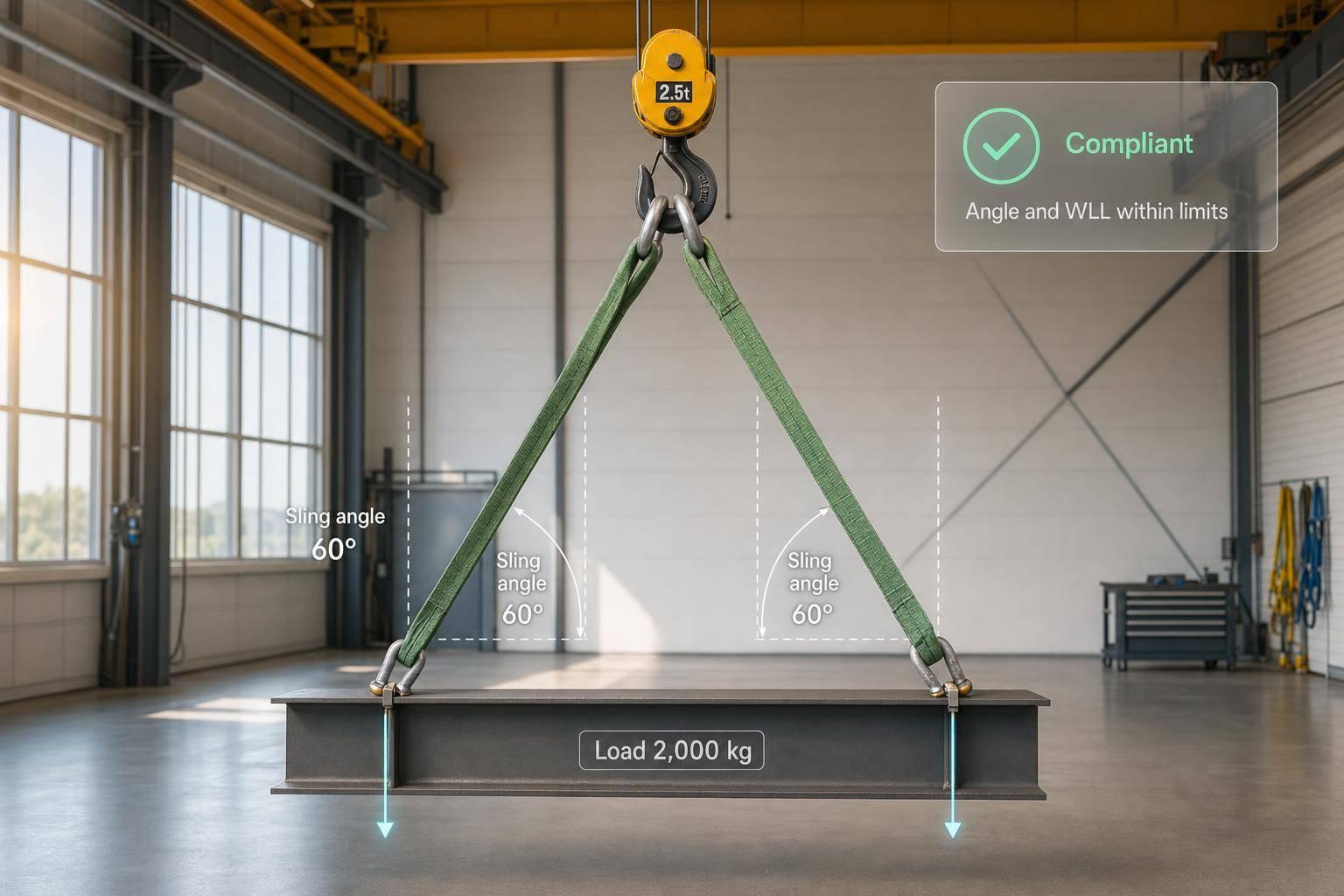
Smarter Lift Checks Before the Hook Goes Up
A safe lift starts long before the load leaves the ground. This Rigging Safety Compliance Checker helps crews review the basics that most often cause trouble in the field: load weight, sling type, sling angle, and how many sling legs are sharing the load. When those inputs are off, tension rises fast, and what looks like a manageable pick can become an unsafe setup.
Why Sling Angle Matters
One of the biggest mistakes in lifting operations is underestimating the effect of sling angle. As the angle gets smaller, the force on each sling increases. That’s why riggers often rely on standard tension formulas and capacity charts when planning a lift. This tool applies that same logic to estimate load per sling and highlight conditions that may fall outside accepted safety guidance.
Practical Compliance Support
The Rigging Safety Compliance Checker is useful for quick pre-lift reviews, training, and jobsite double-checks. It doesn’t replace a qualified person or manufacturer load tables, but it does make it easier to spot red flags early. If a setup is non-compliant, the tool explains why and suggests practical next steps, such as increasing sling count, changing sling type, or improving the sling angle for a safer lift.
FAQs
How does the tool calculate the load on each sling?
The checker uses a standard rigging relationship for multi-leg lifts: tension per sling increases as the sling angle gets smaller. A common simplified formula is sling tension = total load ÷ (number of slings × sin(angle from horizontal)). That means a lower angle creates higher force in each sling, even when the total load stays the same. The tool uses this principle to estimate effective load per sling and then compares that value to the selected sling type's allowable rating.
What counts as a non-compliant rigging setup?
A setup is typically marked non-compliant when one or more basic safety rules are violated. Common examples include a sling angle that is too acute, calculated load per sling that exceeds the sling's rating, or a configuration that relies on too few slings for the stated load. The tool explains exactly what triggered the result so users can understand whether the issue is angle, capacity, load distribution, or a combination of factors.
Can I use this tool as a replacement for a qualified lift plan?
No. This tool is best used as a fast screening aid, not as a substitute for site-specific engineering judgment, manufacturer data, OSHA requirements, ASME guidance, or a qualified person's review. Actual allowable capacities depend on sling size, hitch type, hardware, condition, load center of gravity, edge protection, and environmental factors. Always confirm the result against your sling tag, load chart, company procedures, and applicable regulations before lifting.
Related Articles
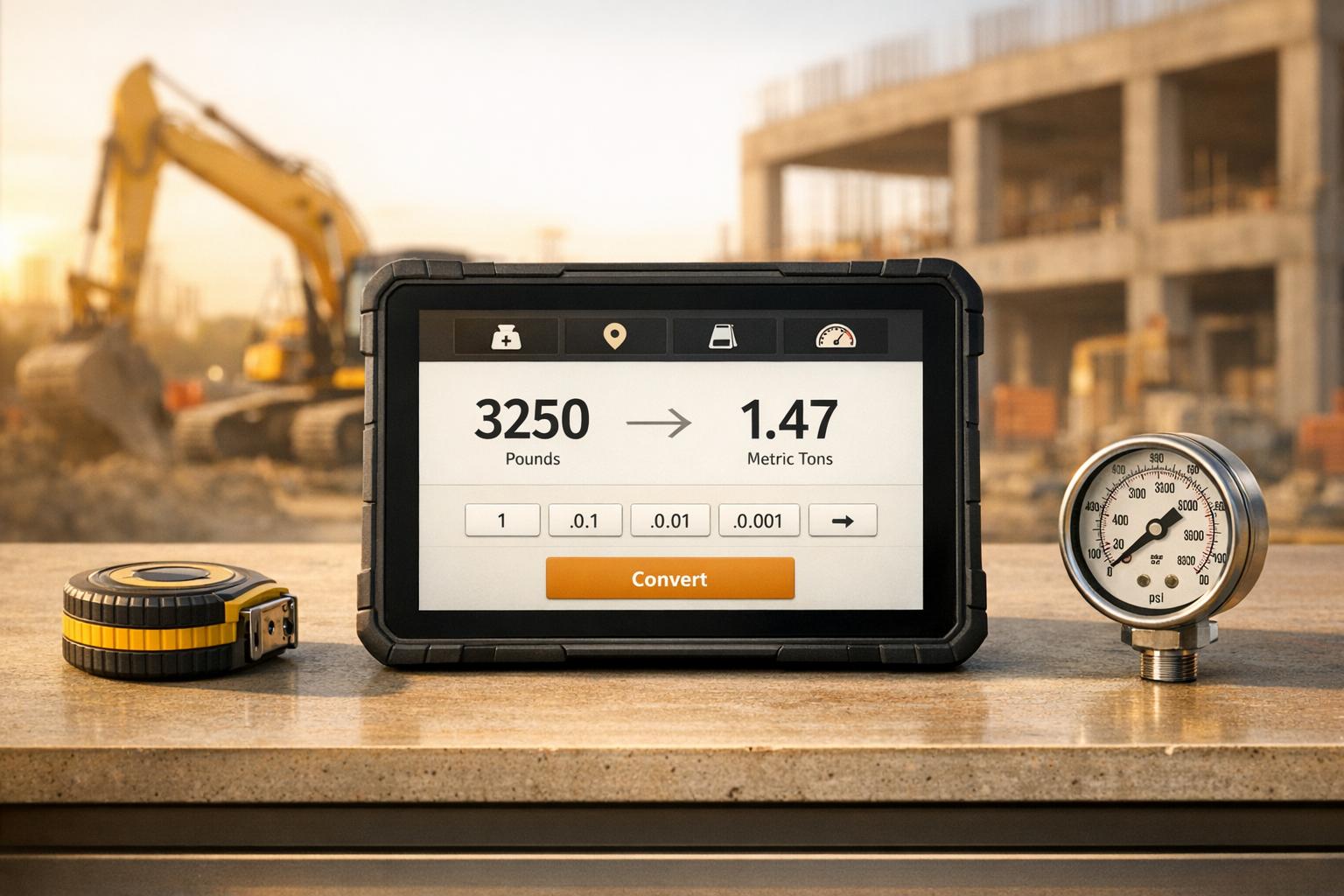
Heavy Equipment Unit Converter
Convert weight, distance, volume, and pressure units fast for construction and engineering jobs, with clear results and easy rounding options.
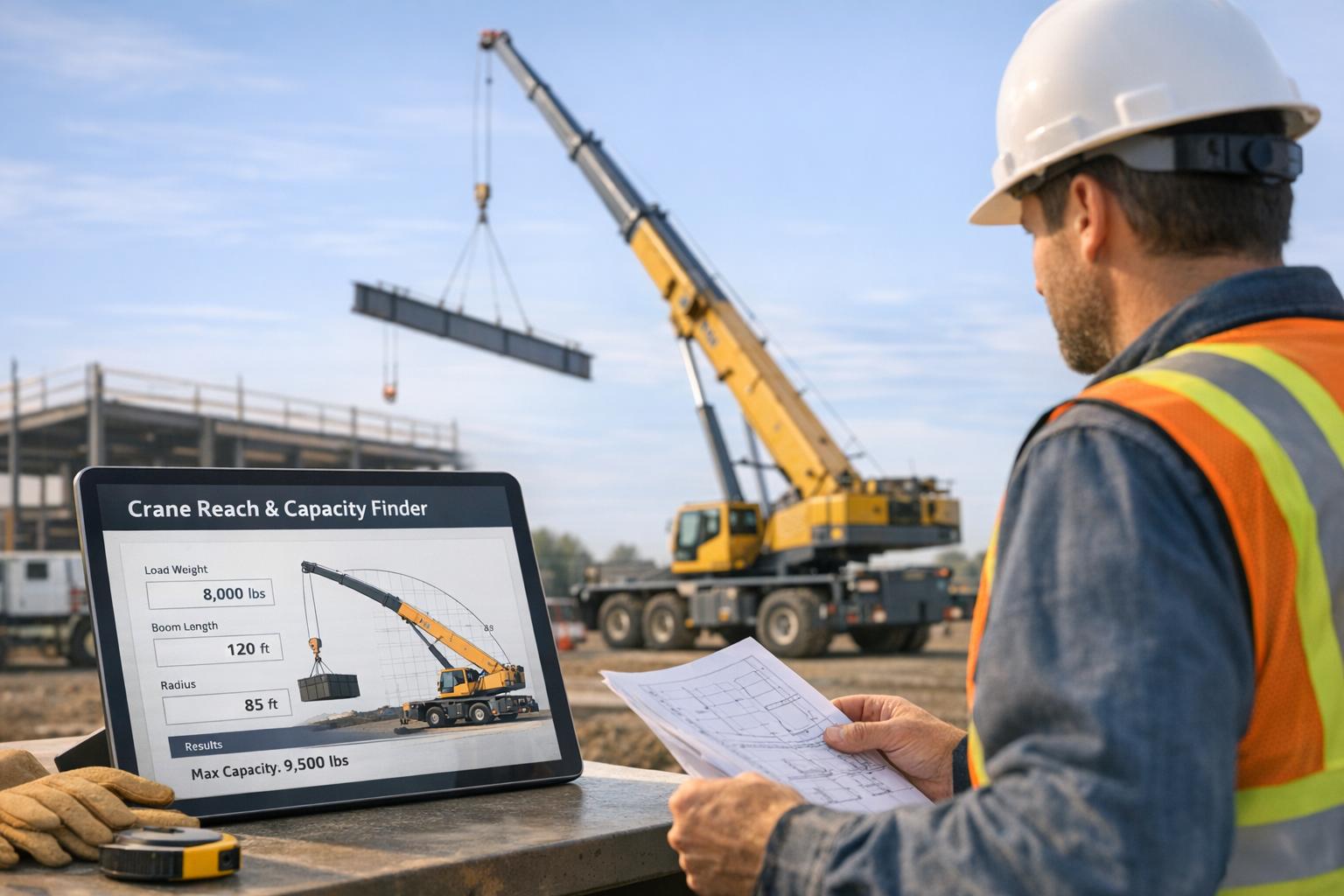
Crane Reach and Capacity Finder
Find the right crane for your lift by comparing reach, height, load, and site limits with practical crane recommendations and safety margins.

Rigging Load Weight Calculator
Calculate safe sling load limits fast. Check angles, material type, and load weight with ASME B30.9-based guidance for job site rigging decisions.