
The Role of Professional Rigging Services in Ensuring Successful Construction Lifts
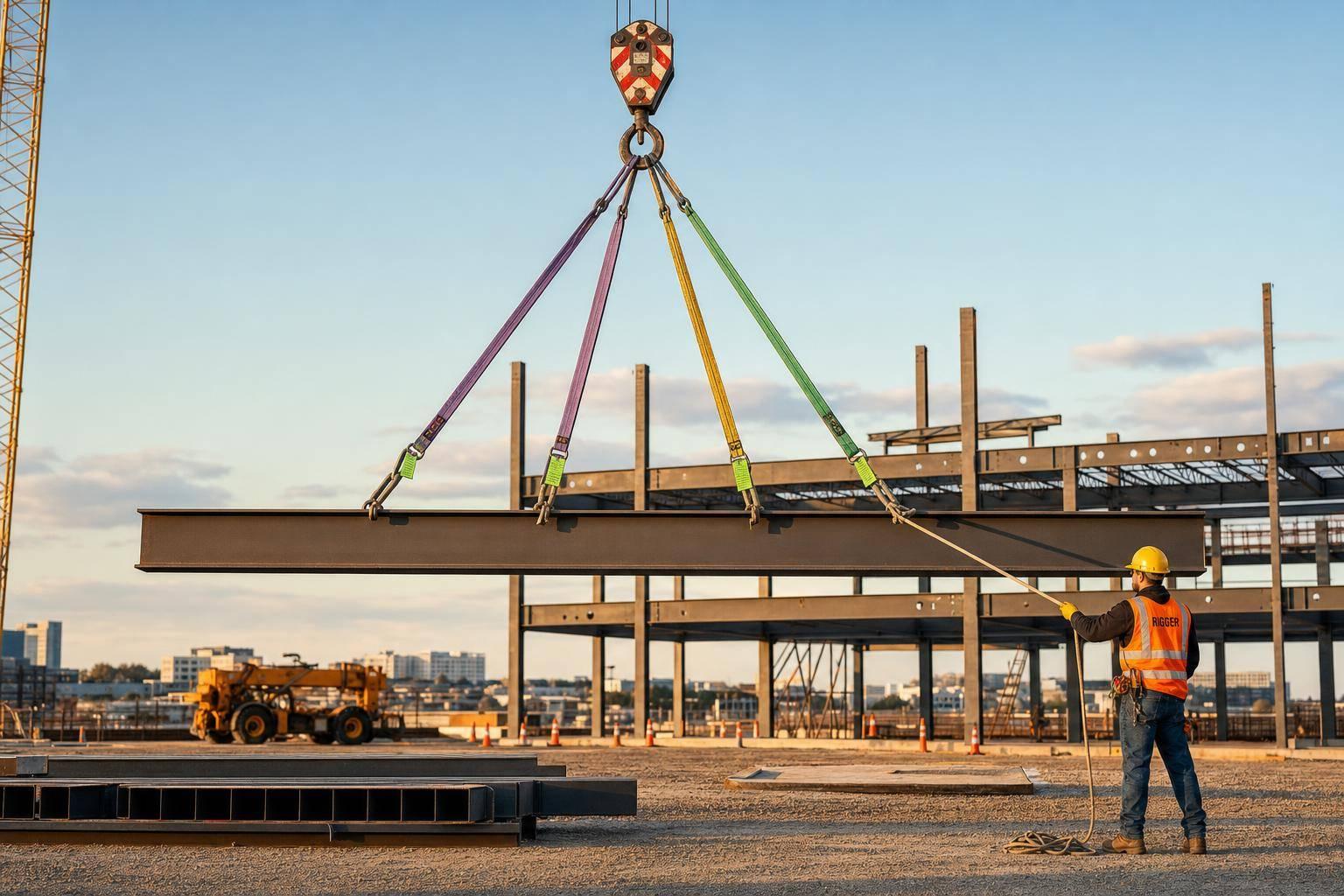
Most lift problems start before the load leaves the ground. In construction, a safe lift usually comes down to four things: confirmed load weight, the right rigging gear, a clear lift plan, and tight crew communication.
If I had to sum up the article in plain terms, it would be this:
- Bad weight data can overload the crane or force last-minute changes.
- Worn or wrong gear can lead to load shift, equipment damage, or worker injury.
- Tight sites and weak communication can slow the job or stop it.
- Rigging crews reduce risk by checking the site, matching gear to the load, and guiding the pick from start to finish.
A few points stand out right away:
- OSHA 29 CFR 1926 Subpart CC requires checks for ground support and work-zone hazards.
- Lifts at more than 75% of crane capacity often trigger stricter review as critical lifts.
- A test lift just a few inches off the ground can catch balance and center-of-gravity problems early.
- In places like New York City, Long Island, and New Jersey, permits, access limits, and signalperson control can affect the whole schedule.
Bottom line: professional rigging is not just about attaching slings. It covers planning, gear checks, site review, signaling, and load control so the lift can move safely and stay on schedule.
- Unknown Load Weight: Rigging crews verify load data, rigging weight, and the crane chart to help prevent overloading and last-minute changes during the lift.
- Wrong or Damaged Gear: Crews inspect slings, shackles, spreader bars, and hooks to reduce the risk of equipment failure and unexpected load movement.
- Tight or Crowded Site: Teams check site access, ground support, and the available swing area to avoid delays, blocked movements, and unsafe crane setup.
- Poor Communication: Crews confirm the signalperson, hand signals, and radio procedures before the lift to reduce confusion during the pick.
If you’re planning a rooftop unit lift, steel pick, heavy equipment move, or tower component placement, this is the part of the job that sets up the rest of the lift.
How To Rig and Lift an Off-Center Load
sbb-itb-798c36f
The main problems behind unsafe or delayed construction lifts
Most lift failures come down to gaps in planning, gear, or team coordination. And once the crane is in place and the load is in the air, those gaps can turn into serious problems fast.
OSHA 29 CFR 1926 Subpart CC requires employers to check ground support and identify work-zone hazards before a lift. In practice, the biggest trouble spots usually fall into three areas: load uncertainty, bad rigging gear, and poor site coordination.
Load uncertainty and incomplete lift planning
A common cause of lift trouble is simple: no one confirmed the load weight. If the weight isn't verified, the crane setup and rigging choice can be wrong from the start. That can overload the setup or force a last-minute rigging change.
It doesn't stop with the load itself. Teams also need to include the weight of rigging hardware like slings, shackles, and spreader bars when they calculate total pick weight. Miss that, and the numbers no longer match the lift.
Improper rigging gear and unstable load control
Compromised rigging gear is another major hazard. Damaged slings, shackles, and other hardware need to be removed from service before the lift starts. This isn't a small detail. It's the kind of issue that can put the whole crew at risk.
If a load is not rigged the right way for its weight, load control gets harder and the chance of failure goes up. At that point, even a routine pick can go sideways.
Site constraints, communication gaps, and schedule impacts
Site conditions can also slow a lift or make it unsafe if no one checks them early. Tight access, crowded work zones, and blocked sightlines make load control harder and can drag out the job.
Communication matters just as much. Without clear signaling, the operator loses the direction needed to move the load safely. That's when delays pile up and mistakes start creeping in.
Professional rigging services work through these risks before the lift begins.
How professional rigging services solve lift planning and equipment problems
Professional rigging takes a lift from guesswork to a written plan. Before anything leaves the ground, riggers check load weight, center of gravity, rigging weight, and operating radius. That means fewer surprises, less downtime, and fewer schedule delays. Just as important, that planning sets up better gear choices and tighter control on site.
Lift plans, load calculations, and critical lift controls
A solid lift plan starts with confirmed numbers, not rough guesses. Riggers get load weights from manufacturer data sheets or certified scale tickets. Then they add the weight of every rigging component between the hook and the load, including slings, shackles, spreader bars, and hooks, to find the true gross load. From there, they check that number against the crane's load chart using the actual radius and boom setup.
If the lift gets close to the crane's limit, the review becomes more strict. Lifts above 75% of rated capacity, or lifts that use more than one crane, are treated as critical lifts. That brings in engineered review, approval, contingency planning, and a test lift.
A test lift is simple but important: the crew raises the load only a few inches off the ground to check balance and see how the slings behave before the full pick. It's a small step that can catch center-of-gravity errors and surprise load rotation before they turn into a mid-air mess.
Selecting the right slings, shackles, spreader bars, and accessories
Rigging specialists match the hardware to the load. Sling choice depends on the weight, shape, surface sensitivity, and jobsite conditions.
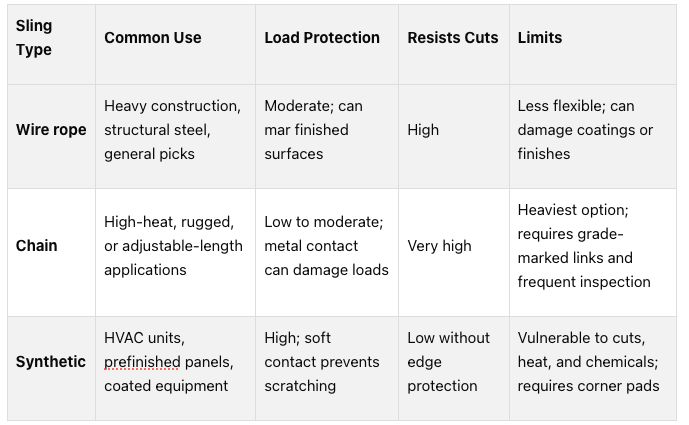 For long or flexible loads, spreader bars help keep sling angles lower. That reduces crushing force and lowers the chance of surface damage. Tag lines come into play when a load may rotate or start to sail in the wind, giving the ground crew more control. Shackles and hooks are chosen to fit the sling and hook connection, and each part's WLL must be higher than the share of the load it will carry, including the extra force created by sling angles.
Site assessment, setup logistics, and execution oversight
Site checks happen before equipment shows up. Rigging crews look at ground bearing, underground hazards, and outrigger support so the crane doesn't settle or punch through. They also walk access routes to check overhead clearances, turning radius, and surface conditions. Exclusion zones are marked under the lift path and inside the crane's swing radius to keep nonessential workers out of drop zones.
During the lift itself, the lift director runs the pick and has clear authority to stop it if conditions change. That could mean a sudden wind shift, someone stepping into the exclusion zone, or the load moving off the planned path. One signal person handles prebriefed hand signals or radio calls, so communication stays clear.
These controls are especially important for rooftop equipment, steel erection, and heavy equipment placements.
Where professional rigging makes the biggest difference on real construction lifts
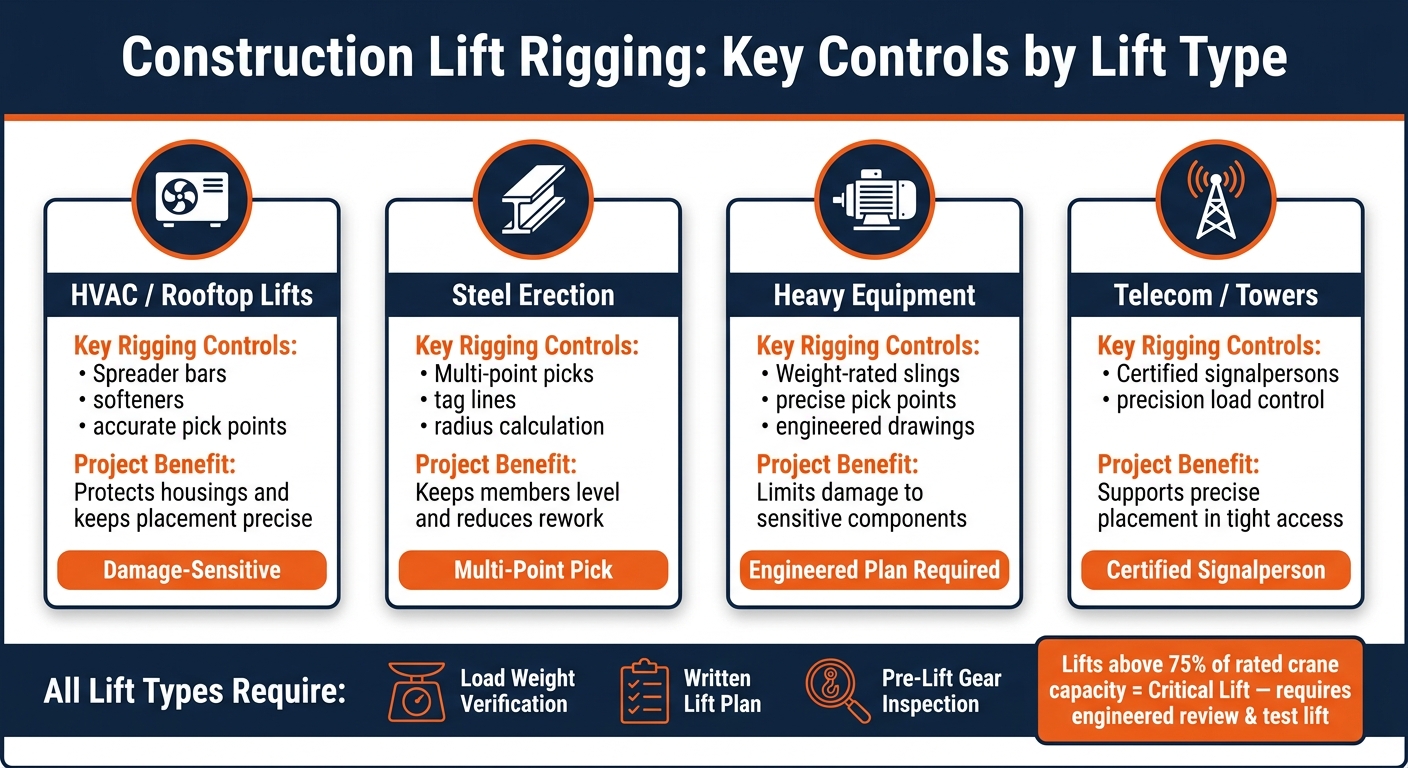
Construction Lift Rigging: Key Controls by Lift Type
Those controls matter most on lifts where there's almost no margin for mistake.
HVAC unit and rooftop equipment lifts
Rooftop HVAC lifts are seldom simple straight-up picks. In many cases, crews have to move damage-prone units through awkward access points like windows, stairwells, or elevator shafts. That’s why the front-end work matters so much. A lift plan, the right rigging setup, and a review of the access route help keep the pick steady and protect the unit housing during placement.
In dense Northeast markets - New York City, Long Island, and New Jersey - rigging teams often take on permits, engineered drawings, and transit approvals. That kind of coordination helps keep site access and logistics in check before the lift even starts.
Steel erection, heavy equipment placement, and telecom components
The same kind of planning applies to steel erection and heavy equipment placement.
Long steel members often need multi-point picks, plus a spreader bar or lifting beam, to stay level. Tag lines help control rotation during the swing. But that control doesn’t happen by luck. It starts with load calculations and sling-angle checks.
Heavy equipment and industrial machinery bring a different set of problems: extreme weight, odd shapes, and delicate internal parts that can be damaged if the load isn’t rigged with care. In those cases, the rigging plan needs to account for how the load behaves, not just how much it weighs.
Telecom and tower components come with another layer of difficulty. Access is often tight, the parts can be sensitive, and the lift may depend on trained riggers and certified signalpersons to keep the load under close control from start to finish. When space is limited, small mistakes can turn into big delays.
What project teams gain from qualified rigging support
What project teams get is a lift with fewer surprises from planning through final placement.
When the rigging team has confirmed load weights, prepared a written lift plan, inspected the gear, and assigned a certified signalperson to handle communication, the lift tends to move with fewer delays and less confusion.
- HVAC / Rooftop Lifts: Use spreader bars, protective softeners, and accurate pick points to protect equipment housings and maintain precise placement during rooftop installations.
- Steel Erection: Use multi-point picks, tag lines, and proper radius calculations to keep structural members level and reduce the need for repositioning or rework.
- Heavy Equipment: Use weight-rated slings, precise pick points, and engineered lift drawings to protect sensitive components and reduce the risk of equipment damage.
- Telecom / Tower Lifts: Rely on certified signalpersons and precise load-control practices to support accurate placement, especially in tight or restricted-access areas.
A radius and site-clearance check before the lift can flag nearby structures, workers, and traffic paths. On tight urban sites, that same check also helps define staging space, clearances, and exclusion zones before the pick begins.
Conclusion: Rigging is not a minor step in a successful lift
A construction lift doesn’t succeed or fail the moment the hook leaves the ground. It’s decided much earlier, during planning. Across HVAC, steel, and heavy equipment lifts, the same thing keeps showing up: the controls covered above are what keep the pick safe and keep the job moving on time.
A successful lift takes more than just the right crane. It also takes experienced rigging professionals who understand load control, jobsite conditions, and the kind of disciplined execution a lift demands.
The practical takeaway is simple: bring rigging into the process early. An early review can spot hazards, confirm the right gear, and make each crew member’s role clear before the pick begins. It also gives the team time to work the audit, lift plan, and compliance checks into the schedule instead of scrambling at the last minute.
For complex lifts, qualified rigging support is the foundation of the operation.
FAQs
When is a lift considered critical?
A lift is considered critical when it involves complex, high-risk factors that call for special planning and careful execution to keep people and equipment safe.
At L&M Crane, that can mean lifts involving specialized machinery, heavy equipment placement, tough site conditions, blocked operator views, or jobsite safety issues tied to the location itself. These lifts need detailed pre-lift planning, including hazard analysis, load calculations, site assessment, and, when needed, a qualified signal person.
Who is responsible for the lift plan?
The professional rigging and crane service team is in charge of the lift plan. That usually means master riggers and lift directors who oversee the planning, assess the site, and manage the lift itself.
They also put together detailed lift plans, engineering drawings, and job hazard analyses. Before the lift starts, they review the process and assign each person a clear role to help keep the job safe and compliant.
How do riggers choose the right sling?
Riggers pick the right sling by first figuring out the load’s weight and finding its center of gravity so the load stays balanced during the lift. They also make sure the sling’s working load limit is higher than the load weight, while factoring in how sling angles can increase tension.
They check the manufacturer markings to verify the sling is approved for the hitch type and the job conditions. Then they inspect the sling before the lift. Any sling with damage, defects, missing identification, or too little capacity must not be used.
Related Blog Posts
Related Articles
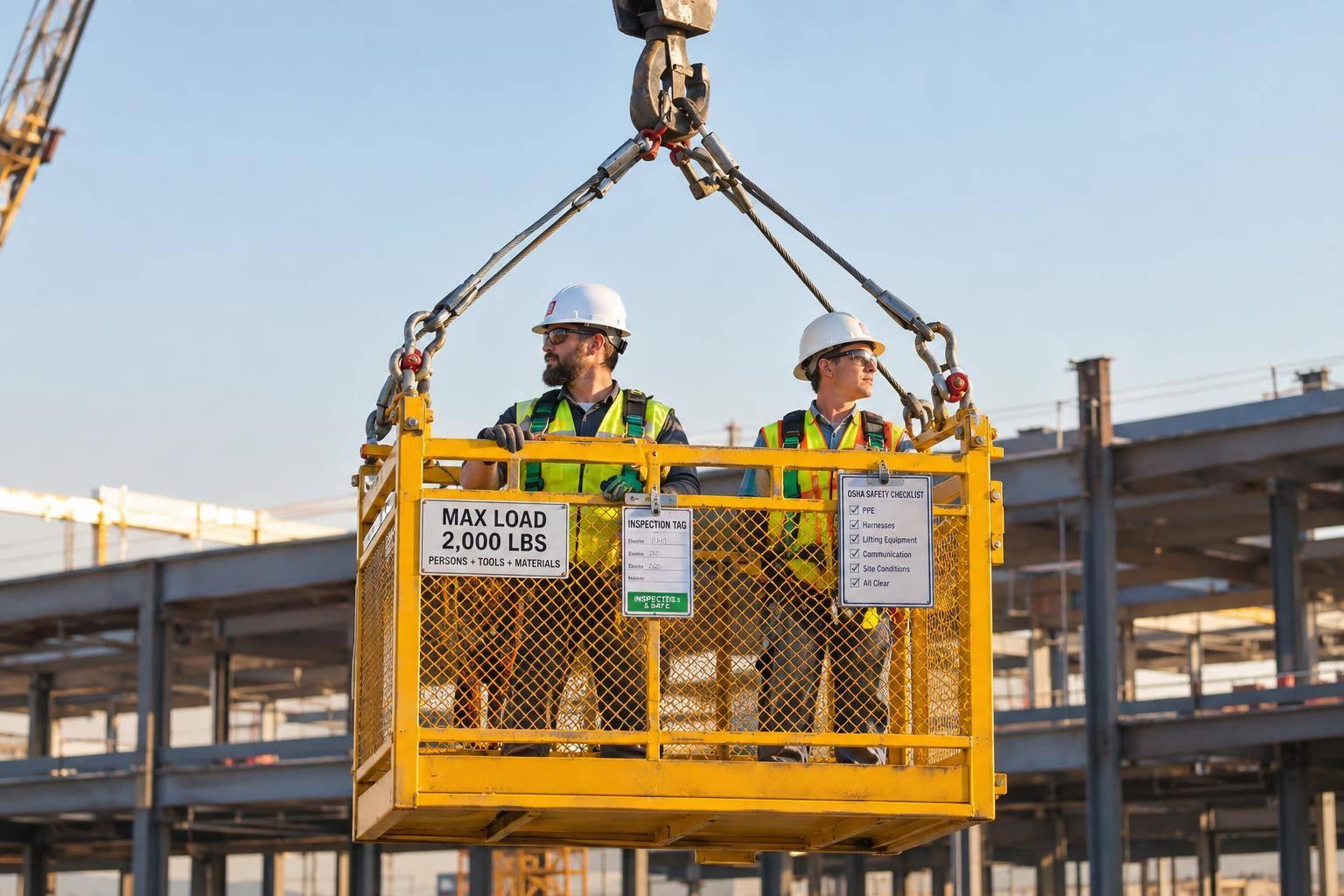
Man Basket Safety Standards: OSHA Guidelines
OSHA checklist for crane-hoisted man baskets: design, proof tests, trial lifts, fall protection, training, and rescue plans.
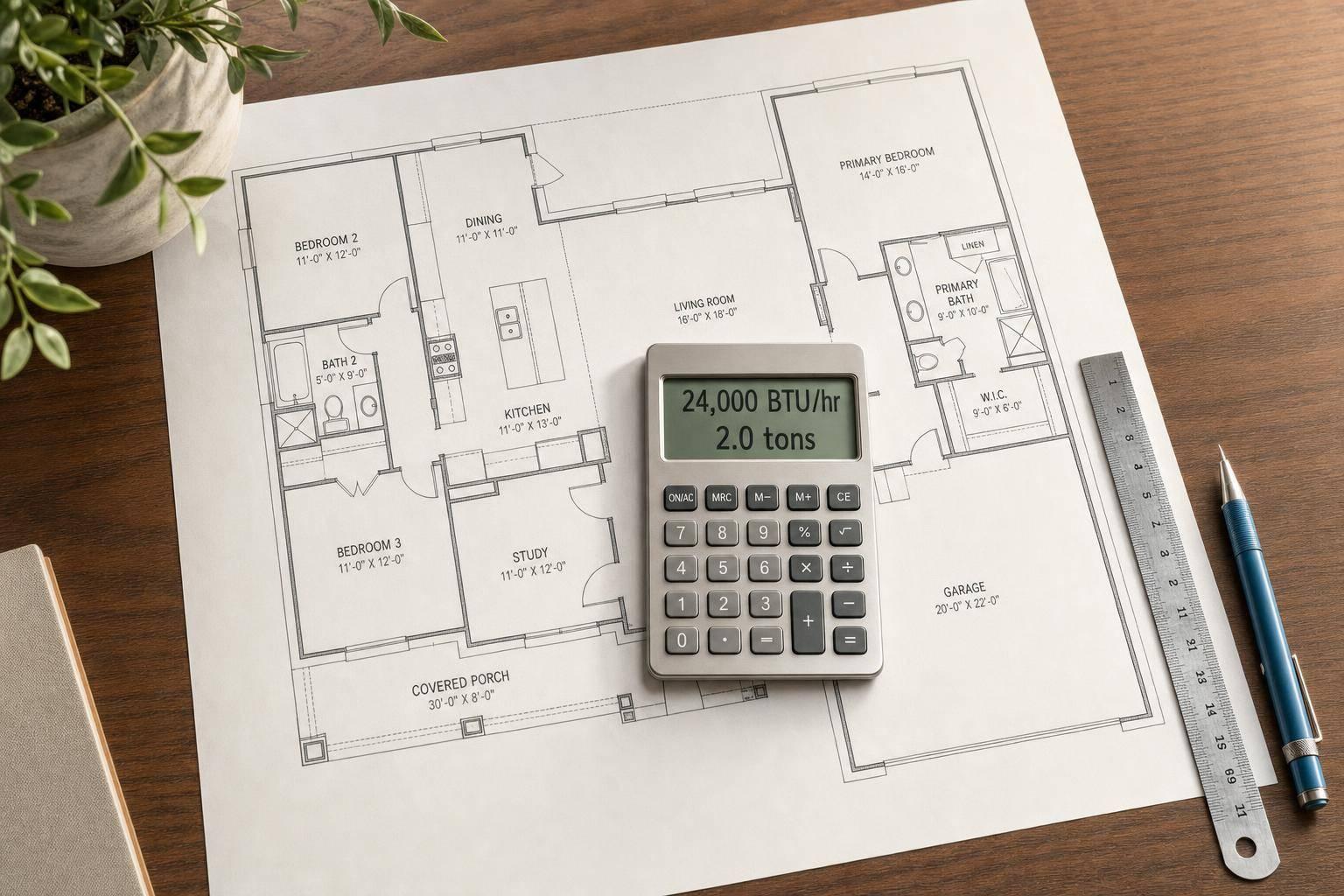
HVAC Tonnage Calculator
Estimate AC size in BTU/hr and tons using area, climate, insulation, and more—then compare your result with practical unit size ranges.
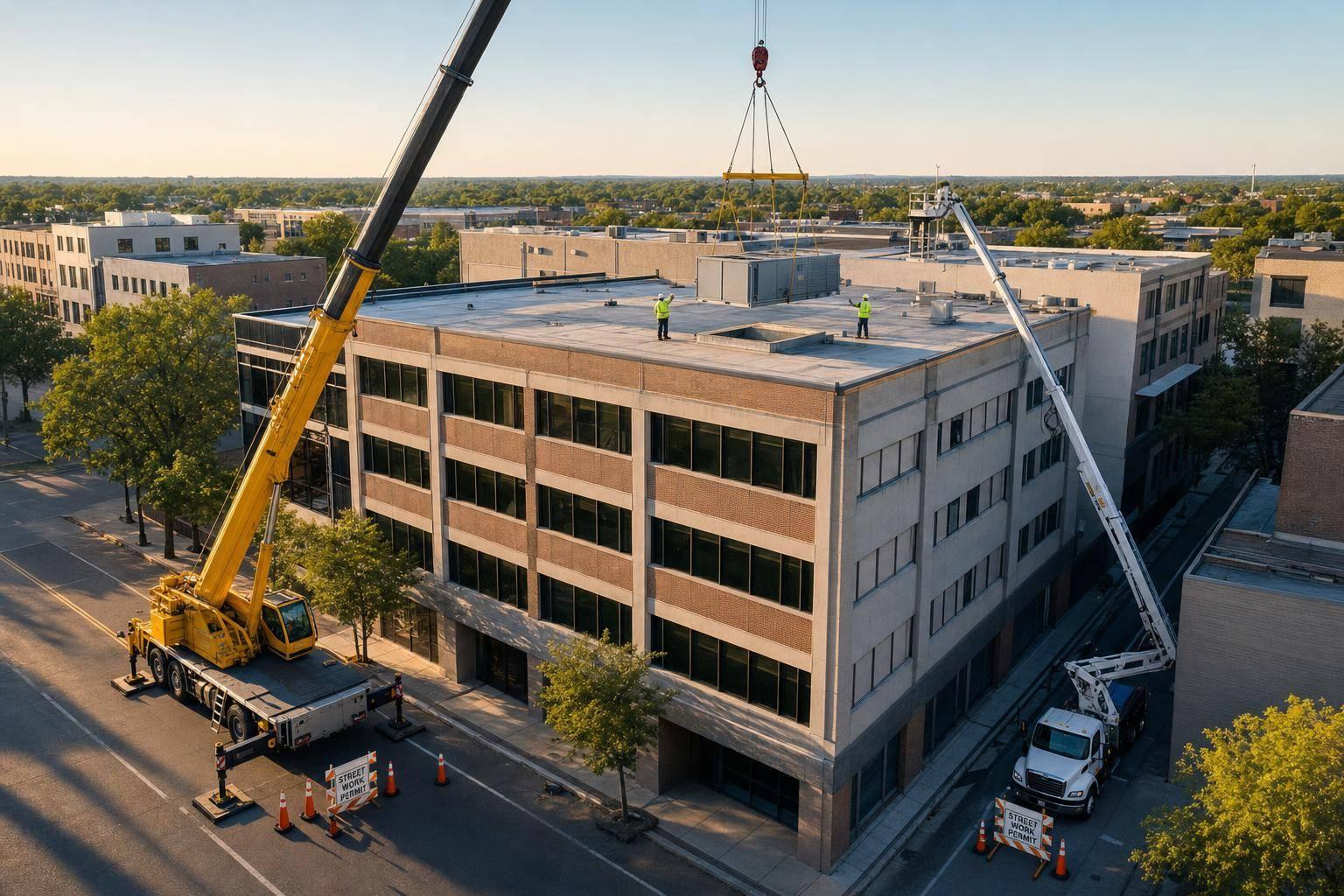
Crane vs Boom Truck for HVAC Lifting
Compare boom trucks vs mobile cranes for rooftop HVAC lifts—weight, height, working radius, site access, permits, and true job cost.